



<< Top >> Japanese

[JVC]

Activities in Laos


About JVC
Vision & Mission
Activities
Cambodia
Laos
Thailand
South Africa
Iraq
Palestine
Afghanistan
Korea
Sudan
Research & Advocacy
Get involved
JVC Staff
Contact Us


Protecting forests and improving agriculture in villages under economical development
Forest conservation led by villagers / Sustainable Agriculture Promotion

¥
(source: "JVC Annual Report - 2008 report / 2009 plan", Mar 2010)

Program Background

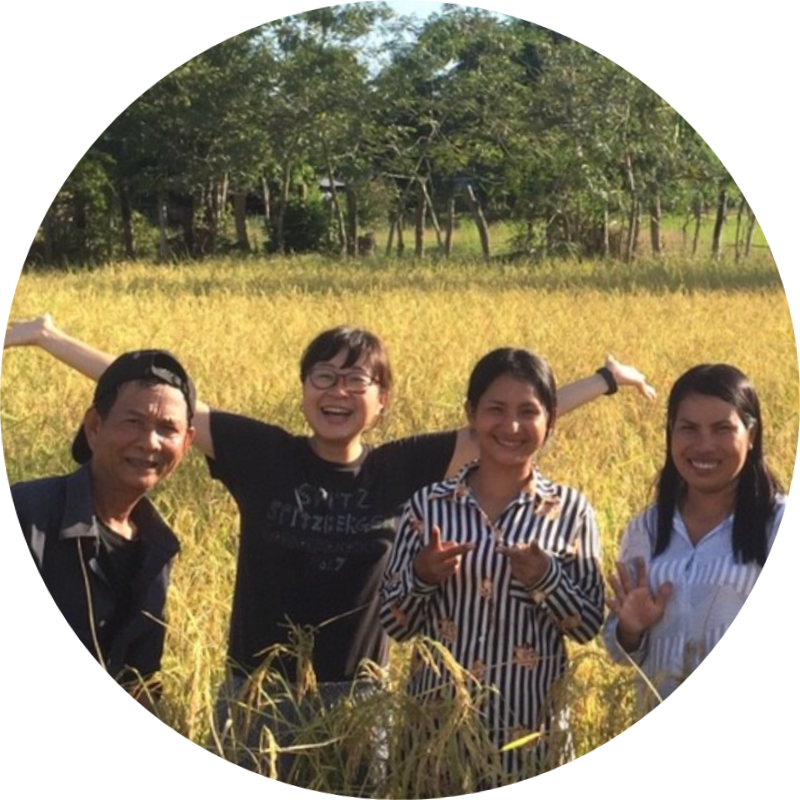
The livelihoods of rural villagers in Laos are dependent upon the natural blessings of the forest. People collect forest products such as mushrooms and bamboo shoots from bountiful forests as their food and also as a source of income. Particularly from May to August each year when supply of rice is most scarce, people com-pensate for the rice shortage by harvesting forest resources and selling them to buy rice.

However in recent years, large areas of forest have been cut down in the name of economic development for the purpose of increasing the cultivation of commercial crop production by private enterprise, commercial plantings of eucalyptus and rubber etc. as well as the development of mining and hydro power. While most of this development is done under the guise of "reducing poverty", this wave of development has often resulted in the reduction of villagers' farmland and forests, and unstable living conditions due to the difficulty of securing food and natural resources.

JVC is working to formally register village forest areas in order to protect the forest resources that support the livelihoods of villagers. We also help farmers to lead a stable life through the improvment of agricultural tech-niques.

Summary of activities

1. Forest conservation by local people and Promotion of sustainable agriculture - Khammouane Province

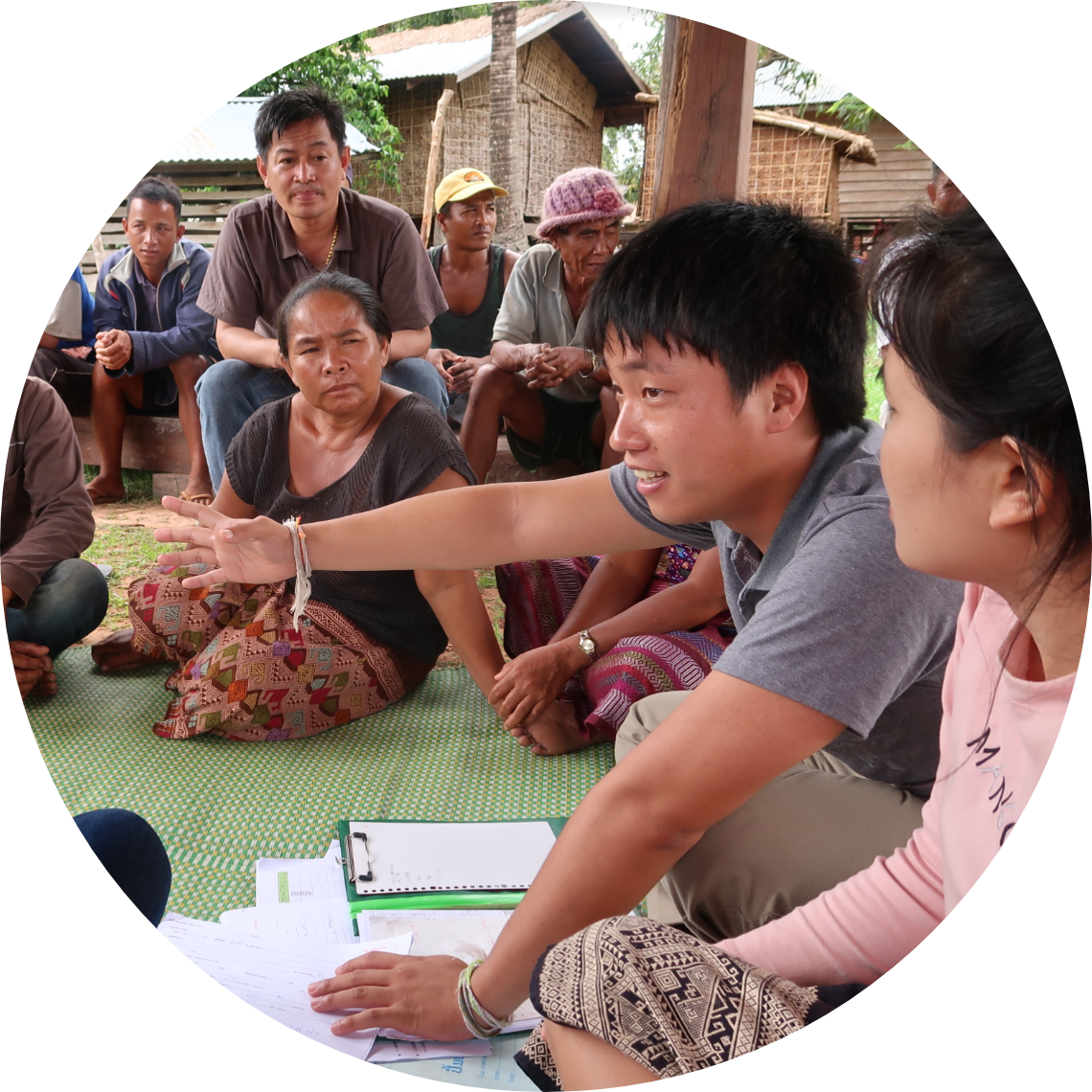
Since 1993 JVC has supported the "Land and Forest Allocation program" in order to protect the forests which have traditionally been managed and utilized by local people. Through this program village forest areas are formally registered with government authorities as "community forest". The aim of this program is to stop the chaotic deforestation and development work by formally granting villagers the rights to use and manage their forests. This program in Khammouane was completed in September 2008. We also provided training of "forest volunteers" who will take leadership in forest management, and support the cultivation of marketable forest products such as rattan in order to increase the forest resources, which are being depleted. Moreover, we supported the improvement of agricultural techniques, developing wells, and rice banks, etcc because villagers desire to improve their lives not just to protect them. Due to poor rice harvests we have supported the System of Rice Intensification (SRI) to improve rice production, as with the Cambodia office, since 2005. We also conducted trainings to make compost and liquid fertilizer using local resources instead of using chemical fertilizers in order to limit expenditure and halt environmental contami-nation.

Land and Forest Allocation Program

Through this program a village obtains the right to use the land and forests over their traditional forest areas through the formal registration of village forests with government authorities as a "Community forest" (a right delegated by the State). In return, the village is required to manage the forests by zoning them into protected forests, forests for use, degraded forests, etcc JVC educates people about the importance of forests, provides a place for villagers to express their views and supports villagers in the zoning of their forests.

2008 Annual Report

Forest conservation

In April, JVC evaluated the project before its completion and reviewed the achievements and challenges of the third phase activities, which have been conducted since 2005. As a result, we deter-mined some positive achievements and decided to complete the project in September as scheduled. During the remaining period, we conducted activi-ties to improve the forest management capability of villagers. We invited an NGO from Thailand to train forest volunteers, and provided them with training on management and use of community forests. Moreover, we also conducted a study tour for rattan farmers to visit advanced farmers who had succeeded in bringing rattan into market. In areas where industrial forestry has been introduced, there have been frequent incidents of one village with in-dustrial plantations entering neighboring villages to obtain natural resources that that have been depleted from their own area. JVC implemented the Land and Forest Allocation Program and solved the problem of the village boundary line. In May, we invited Lao administrators to Japan to observe and learn about the negative impacts of economic development and community development as an alternative method of development.

Promotion of sustainable agriculture

In order to spread the System of Rice Intensifica-tion being practiced by villagers, we produced a VCD and introduced it to various villages and or-ganizations. JVC also conducted workshops to spread the system and established a network for practicing groups. We also finalized our rural de-velopment activities, sharing experiences from a vil-lage that has been managing a rice bank for a long time and learning the keys to successful manage-ment. In addition, we installed a roof on a shallow well that we had previously constructed and set up a fence around it.

2. Forest conservation and promotion of sustainable agriculture - Savannakhet Province

Based on our experiences in Khammouane Prov-ince, JVC began a new project to support forest conservation and the promotion of sustainable agri-culture in Savannakhet Province where economic development is rapidly expanding. Savannakhet is the largest province in Laos and in the center of the province, the Economic East-West corridor road is under construction with support from the Asian De-velopment Bank and the Japanese Government. "Development projects" by private industry, such as rubber tree and sugarcane plantations, are making inroads into upcountry villages. Following this, deforestation is rapidly accelerating.

2008 Annual Report

After completing our project in Khammouane prov-ince in September, we moved to the neighboring province, Savannakhet, to prepare for the start of our new project. In December, the new project was approved by the Foreign Ministry of Laos and we held a signing ceremony on January 16th. In February we officially started to plan for the project in the vil-lages. In this area, people are suffering from a chronic shortage of rice due to poor soils, so we proposed various activities to solve the shortage of rice, and will conduct activities to increase the harvest of rice and other agricultural crops and to increase income-generating activities. During these discussions, villagers requested to establish protective areas for fish in order to protect and increase fish populations that have been decreasing due to unsustainable fishing practices. We plan to observe successful cases of other villages and to assist villagers to establish a set of regulations to manage village aquatic resources. We also conducted a survey of the new villages where activities will be conducted, since we will expand our project to 15 villages in two provinces over three years.

2009 Annual Plan

As this is the first year of the project, we will conduct a participatory survey of villagers in six villages and plan for the project. We will build relationships with villagers through discussions and start training and activities based on their specific needs. As for the forest conservation, the lands and forests of villagers in most of villages have been taken over by enterprises due to aggressive economic development. On the other hand, a major national review is now taking place with the "Land and Forest Allocation program" by the Laotian government. This has been due to the chaotic situation involving land con-cessions caused by unrestrained investment in agro-industrial plantations nationwide . JVC is actively participating with the government in the review of the LFA programme and when the new LFA is released (officially called Participatory Land Use Planning (PLUP) we will conduct a trial in one village using the revised procedures. To counter the depletion of natural resources, we will assist villagers to establish protected areas to focus on preventing decreases in aquatic resources.

As for agricultural activities, we will be conducting training in the composting of organic fertilizers using local resources, which will lead to soil improvement. We will also organize a study tour to observe the System of Rice Intensification which is designed to increase rice yields. Experimental cultivation of rice using SRI will be conducted at JVC. In addition, we plan to conduct training on fish farming in reservoirs and on livestock production methods to prevent dis-eases.


© 2004 - 2010 Japan International Volunteer Center(JVC) all rights reserved.